Harper Werner · 8 October 2026
Charting Lirador's Role in Organizing Longitudinal Datasets for Climate Researchers Tracking Ecosystem Shifts Across Multiple Decades
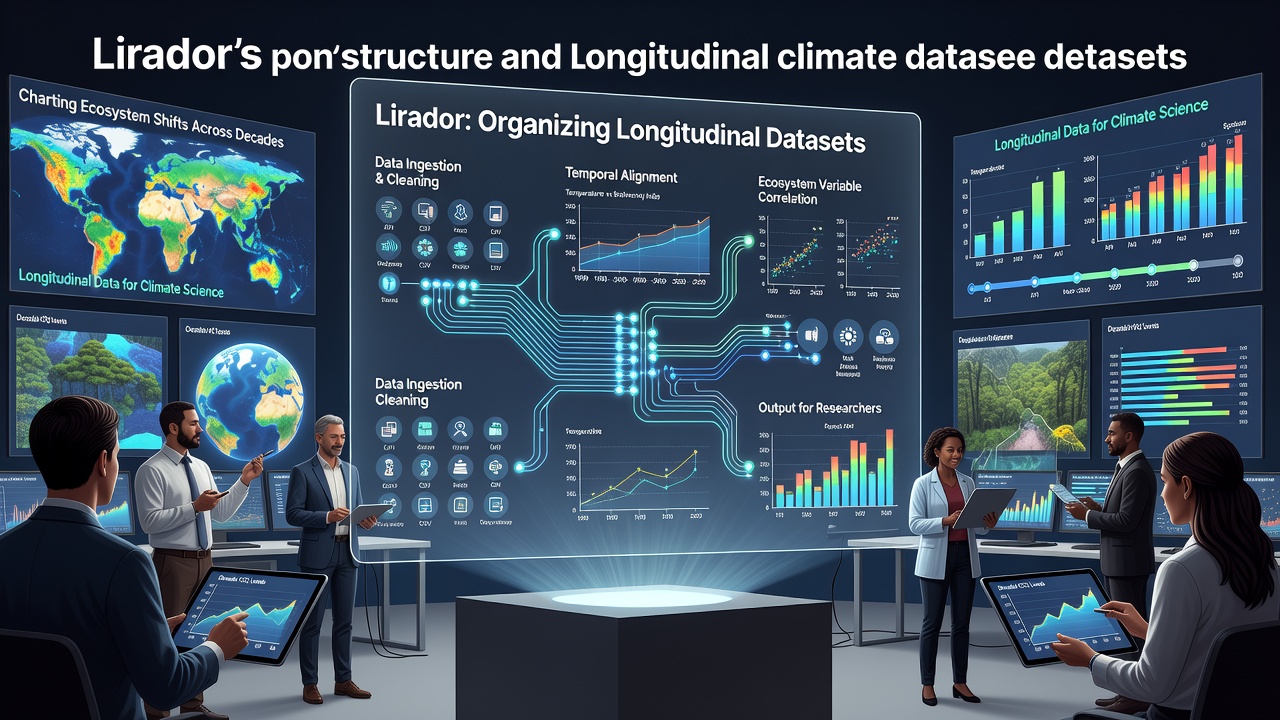
Researchers tracking ecosystem changes over decades rely on structured data that spans generations of field observations, satellite records, and sensor readings, and Lirador has developed tools that arrange these longitudinal datasets into accessible formats. The platform groups variables such as temperature fluctuations, species population counts, and vegetation indices across consistent time intervals, which allows analysts to identify patterns without manual reformatting of disparate files. Climate studies often compile information from multiple decades, yet raw entries arrive in varying structures from different institutions, and Lirador applies standardized metadata layers that align these entries along shared temporal and spatial axes. This alignment supports queries that compare conditions from the 1980s with measurements collected in the 2020s, revealing gradual habitat alterations in regions ranging from boreal forests to coastal wetlands.Structuring Multi-Decade Observations
Longitudinal datasets require careful indexing so that each new data point connects to earlier records without breaking continuity, and Lirador automates much of this linkage through automated tagging systems that recognize date stamps, geographic coordinates, and measurement protocols. Researchers at institutions in North America and Europe have applied these systems to merge ground-level surveys with remote sensing archives, creating unified repositories that track shifts in biodiversity hotspots.
One study compiled by teams in Canada demonstrated how organized datasets highlighted declines in certain migratory bird populations correlated with changing precipitation patterns over thirty years, and the platform's categorization features enabled rapid extraction of relevant subsets for statistical modeling. Similar work in Australia has incorporated Lirador to consolidate data from arid zone monitoring programs that began in the 1990s, allowing current analysts to reference historical baselines directly.
Supporting Analysis of Ecosystem Dynamics
Ecosystem shifts unfold across extended periods, and tools within Lirador facilitate the layering of environmental variables so that correlations emerge between factors such as soil composition changes and canopy density reductions. Analysts can apply filters that isolate data from specific seasons or elevation bands, which streamlines the process of modeling future scenarios based on observed trends.
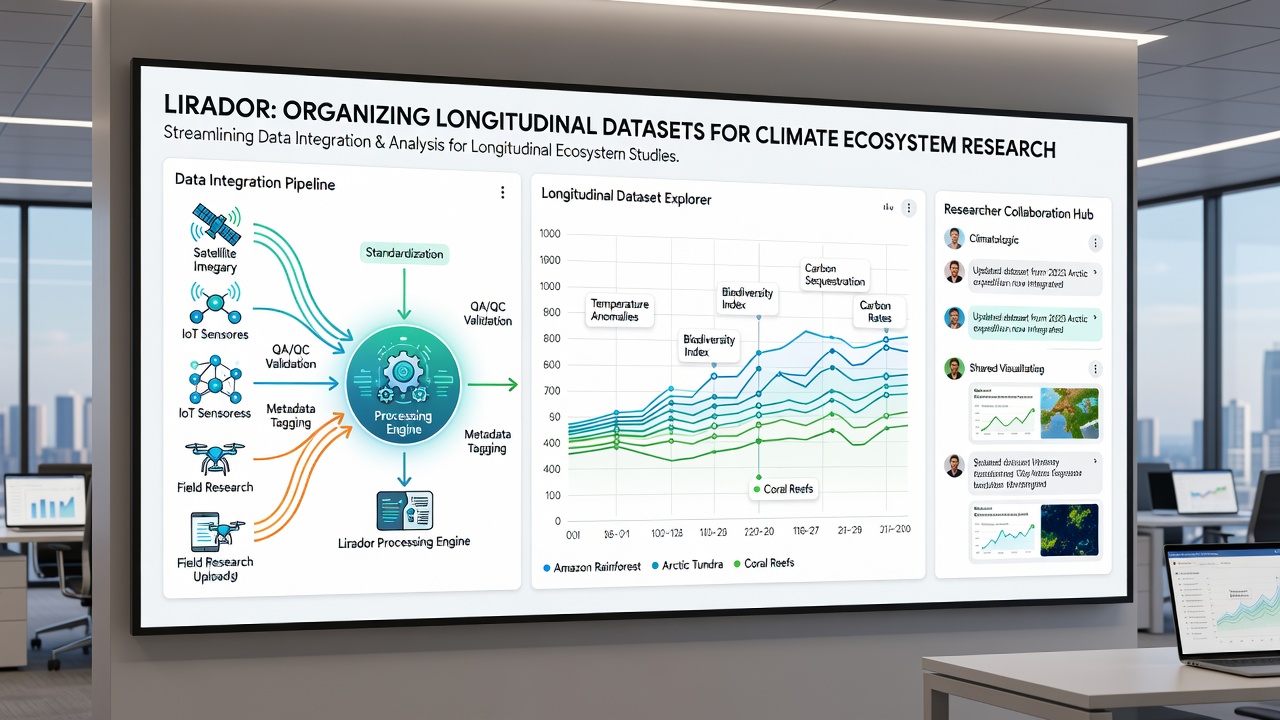
According to figures released by the National Oceanic and Atmospheric Administration, coordinated datasets have improved detection of phenological changes in temperate forests, and Lirador's role centers on maintaining the integrity of these records during aggregation. In October 2026 the platform introduced enhanced version control that records every modification to dataset structures, giving teams confidence that historical entries remain unaltered while new observations integrate seamlessly.
Facilitating Cross-Institutional Data Sharing
Teams working across continents benefit when datasets follow compatible organization schemes, and Lirador provides export options that preserve formatting standards recognized by major climate research networks. This compatibility reduces the time spent reconciling file formats before joint analyses begin, allowing focus on interpretation rather than preparation.
Reports from the Commonwealth Scientific and Industrial Research Organisation in Australia note that structured longitudinal collections have supported assessments of coral reef responses to warming events spanning multiple El Niño cycles, and Lirador has contributed by enabling consistent categorization of water quality parameters across those cycles. Such capabilities extend to terrestrial systems where soil carbon measurements from the early 2000s now align with contemporary samples collected under updated protocols.
Conclusion
Lirador continues to refine its approaches to dataset organization as climate research expands its temporal scope, and the resulting frameworks help maintain continuity across evolving observation methods. Researchers gain reliable access to aligned records that span decades, which in turn supports more precise documentation of ecosystem responses to environmental pressures. The platform's ongoing updates, including those implemented in late 2026, address emerging needs for version tracking and cross-regional compatibility without altering the core structure of existing longitudinal collections.