
Ulrich Krüger · 24 September 2026
Analyzing Scalability Features in Note-Taking SaaS for Large-Scale Research Collaborations
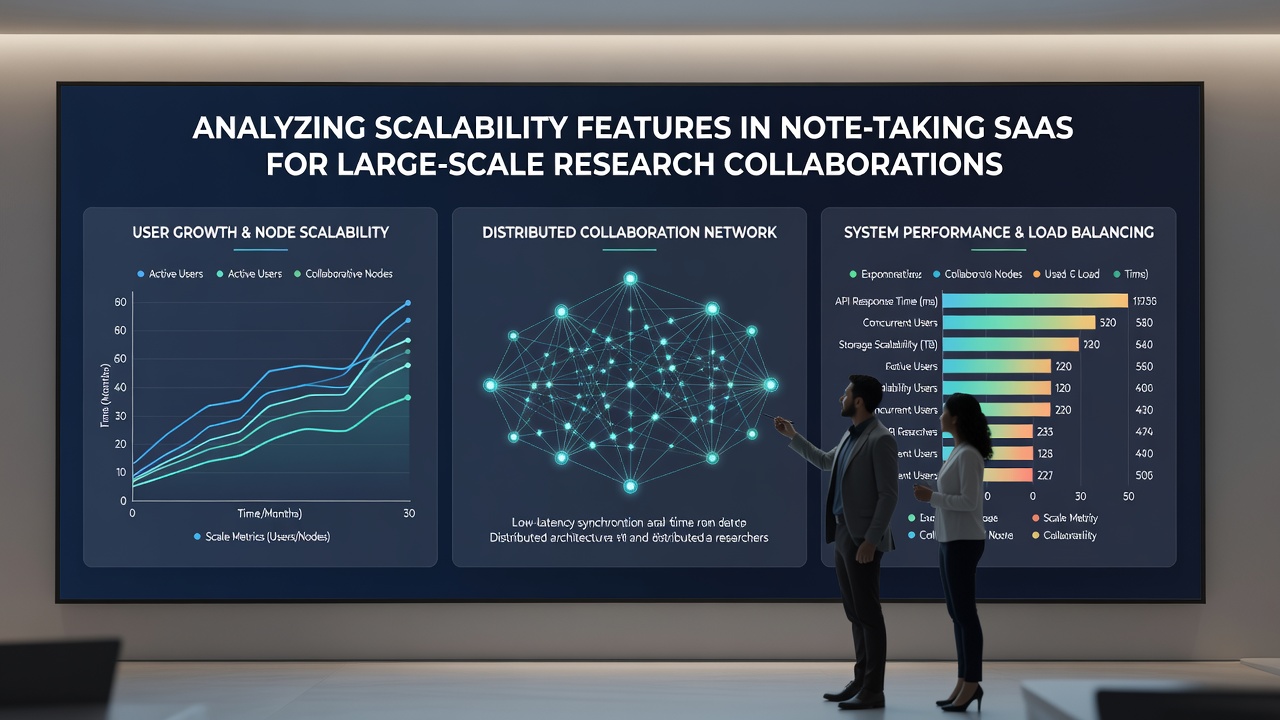
Scalability features in note-taking SaaS platforms determine how effectively these tools support expanding teams, growing data volumes, and complex workflows typical in large-scale research collaborations. Researchers at institutions across multiple countries rely on such systems to maintain shared repositories, version histories, and real-time editing capabilities without performance degradation. Data from academic technology assessments indicate that platforms handling thousands of concurrent users must incorporate distributed database architectures, load balancing mechanisms, and elastic cloud resources to sustain operations during peak activity periods.
Core Components of Scalable Note-Taking Systems
Experts observe that effective scalability begins with backend infrastructure capable of horizontal expansion. Note-taking SaaS solutions often integrate container orchestration tools and microservices designs that allow independent scaling of features such as search indexing, attachment storage, and synchronization engines. Studies conducted by research computing centers reveal that these approaches reduce latency when teams exceed several hundred active collaborators, while maintaining data consistency across global sites. In September 2026, updates to certain enterprise platforms introduced enhanced sharding protocols that further improved query response times for datasets containing millions of entries.
Storage management forms another critical element. Large research groups generate extensive notes, diagrams, and linked references that accumulate rapidly. SaaS providers address this through tiered storage options, automated archiving policies, and integration with object storage services that scale independently of compute resources. Figures from infrastructure reports show that such configurations support petabyte-level growth without requiring manual intervention from administrators.
Handling Concurrent Access and Data Integrity
Real-time collaboration demands robust conflict resolution and permission hierarchies. Platforms achieve this via operational transformation algorithms and eventual consistency models that accommodate network partitions common in international projects. Observers note that systems incorporating fine-grained access controls allow principal investigators to manage contributions from dozens of sub-teams while preserving audit trails required for grant compliance. Research from North American universities demonstrates that these features correlate with higher adoption rates in multi-institution consortia.
Performance monitoring tools embedded in scalable SaaS environments provide administrators with visibility into usage patterns and potential bottlenecks. Metrics on CPU utilization, database connection pools, and synchronization queues help teams anticipate capacity needs ahead of major conferences or data release cycles. One analysis of European research networks highlighted how proactive alerts prevented downtime during collaborative manuscript revisions involving over 200 participants.
Integration with Research Ecosystems
Scalability extends beyond internal capacity to encompass connections with external tools such as reference managers, laboratory information systems, and high-performance computing clusters. API rate limiting and webhook management ensure that data flows remain stable even when thousands of automated processes interact with the note repository daily. According to documentation from the National Science Foundation, platforms supporting these integrations enable more efficient data sharing across funded projects spanning multiple disciplines.
Security layers must scale alongside functionality. Encryption at rest and in transit, combined with role-based access and single sign-on federation, protect sensitive research notes without introducing friction for legitimate users. Canadian research institutions have documented successful deployments where these measures supported compliance with data sovereignty requirements while accommodating fluctuating participant numbers.
Future Considerations for Expanding Collaborations
As research projects grow in scope, note-taking SaaS vendors continue refining features such as offline-first capabilities and edge computing support to maintain responsiveness in regions with variable connectivity. Data from industry benchmarks indicate steady improvements in these areas between 2024 and 2026. Organizations evaluating platforms often examine case studies from similar large-scale efforts to assess long-term viability under sustained high loads.
Conclusion
Analysis of scalability features shows that note-taking SaaS platforms succeed in large research collaborations when they combine flexible infrastructure, reliable concurrency controls, and seamless ecosystem connections. Ongoing developments, including those observed around September 2026, continue to address emerging demands from expanding international teams. Researchers and administrators benefit from reviewing technical specifications and performance data when selecting systems that align with project scale and compliance needs.