Carlo Koch · 5 November 2026
Adapting Note Organization Workflows for Ethnographic Studies Involving Cross-Cultural Interviews and Multimedia Evidence Collection
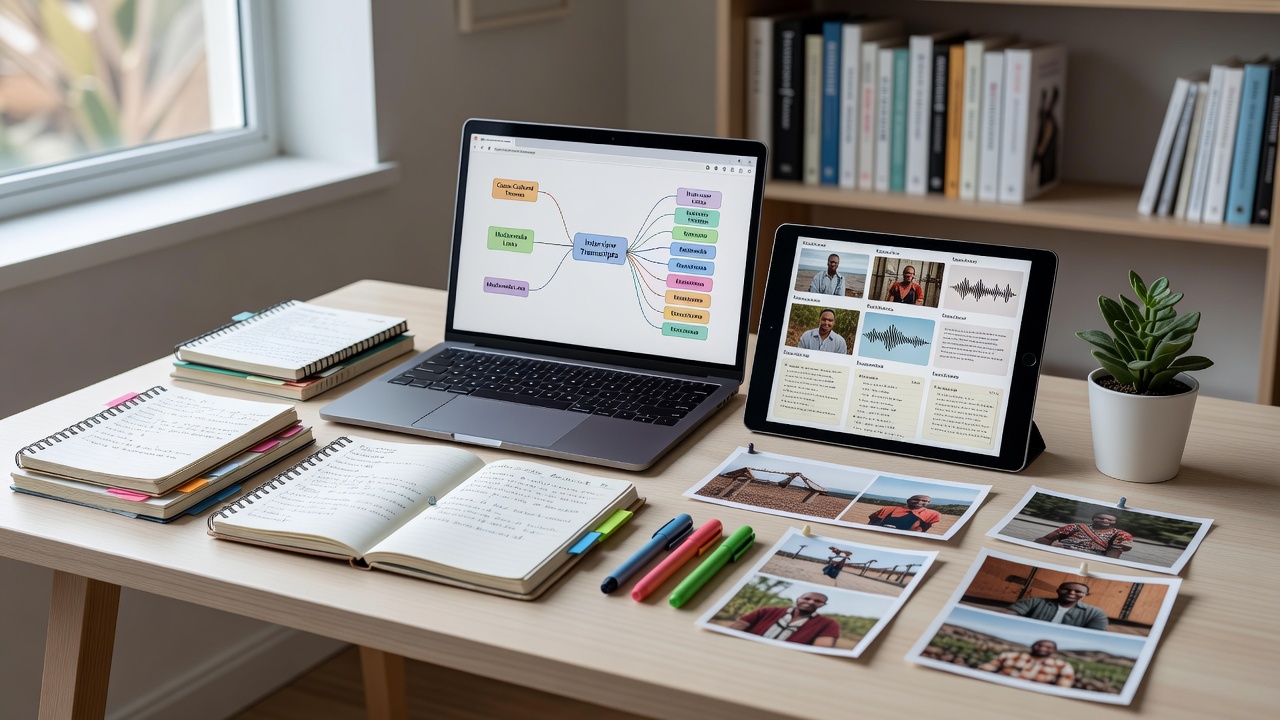
Ethnographic research demands flexible note organization systems because cross-cultural interviews generate layered data that includes spoken narratives, translated transcripts, and visual records gathered across multiple sites. Researchers collect audio recordings, photographs, and video segments while navigating language differences and varying consent protocols that shift from one community to another. Those who've studied this process observe that standard linear note-taking breaks down when interviews span several days and involve participants who share stories through gestures, objects, and shared activities rather than words alone.
Core Challenges in Cross-Cultural Data Handling
Language barriers create immediate hurdles since interviewers often work with interpreters who introduce their own interpretive layers during real-time exchanges. Cultural norms around time, directness, and privacy further complicate how researchers record observations because some communities prefer stories told in circular patterns rather than chronological sequences. Multimedia elements add volume because a single interview session might produce dozens of images showing artifacts, maps drawn on the ground, or group interactions that carry meaning beyond the spoken record. Data from the Social Science Research Council shows that projects involving three or more cultural groups require note systems capable of tagging entries by both content and context to avoid misinterpretation during later analysis stages.
Integrating Multimedia into Structured Workflows
Effective workflows begin with immediate categorization at the point of collection because delays lead to lost connections between an image and the interview segment it illustrates. Researchers assign metadata fields for location, participant identifiers, cultural themes, and file types while still in the field so that later retrieval remains precise. Audio files receive time-stamped annotations that link specific moments to corresponding visual evidence, and translation notes sit alongside original language transcripts to preserve nuance. Observers note that teams working in regions like Southeast Asia and West Africa have developed shared tagging vocabularies that account for local concepts without forcing them into English categories.
Practical Workflow Adjustments for Field Teams
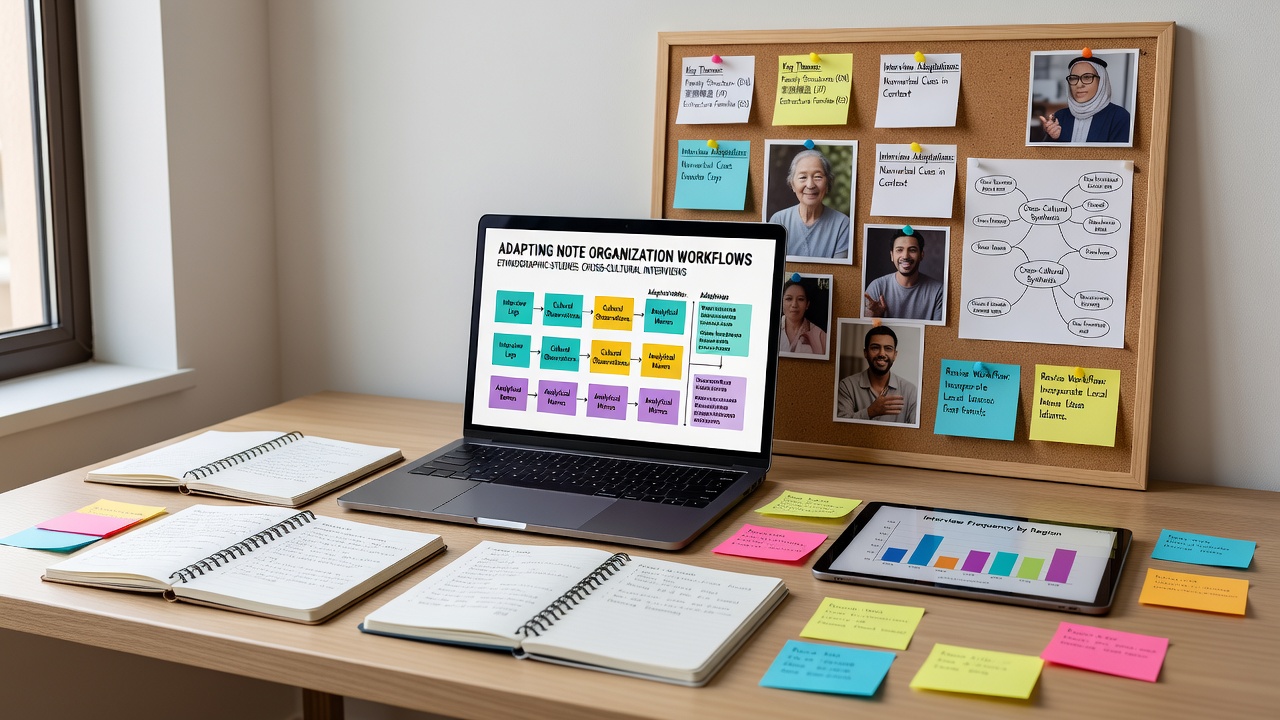
Teams start by establishing daily review sessions where raw notes and media files receive initial sorting before memory fades. One group studying migration patterns in Central America created a two-tier system in which quick voice memos capture immediate impressions while fuller written entries and linked media receive detailed tags later that same evening. Another project focused on indigenous knowledge systems in Australia incorporated community review checkpoints so that participants could flag sensitive material before it entered permanent archives. These adjustments keep the note organization process responsive rather than rigid. Figures from the Australian Research Council indicate that projects using such iterative tagging complete data cleaning phases 30 percent faster than those relying on post-fieldwork organization alone.
Preparing for Advances Expected by November 2026
Software platforms continue to evolve toward better support for multilingual tagging and automated transcription that respects dialect variations. Researchers attending the Ethnographic Methods Symposium planned for November 2026 will examine new protocols for handling consent across digital platforms while maintaining cultural ownership of recorded stories. Current experiments test voice-to-text tools that preserve original phrasing alongside machine-generated translations, allowing analysts to trace how meaning shifts during interpretation. Those preparing for the symposium report testing hybrid systems that combine cloud storage for large video files with local encrypted drives for sensitive interview segments.
Conclusion
Adapting note organization workflows requires ongoing attention to both technical capabilities and cultural sensitivities because ethnographic data grows more complex with each added interview and media file. Projects succeed when researchers build tagging structures early, review entries daily, and incorporate participant feedback throughout the process. Continued refinement of these methods supports accurate representation of diverse voices while managing the growing volume of multimedia evidence collected across global field sites.